Revealing What's Hidden
Every day, we're asked to make sense of more information than ever before, with news, social media, algorithms, headlines, opinions. It can be hard to know what's missing, who to trust, or how different people arrive at such different views of the world.
Research suggests many Americans are wrestling with these same challenges. In 2024, only about 22% of Americans said they trusted the federal government to do what is right most or all of the time, while trust in many public institutions remains near historic lows. pewresearch.org
At the same time, many people are feeling overwhelmed by the volume of information they encounter. A Pew Research Center study found that roughly two-thirds of Americans say they feel worn out by the amount of news there is today. pewresearch.org
These trends don't necessarily mean people care less about civic life. In fact, research shows many people still believe it is important to stay informed and participate in their communities. The challenge is navigating an increasingly complex information environment. instituteforpr.org, pewresearch.org
Unredacted grew out of these questions. The project creates space to explore how people encounter information, build trust, and make meaning from what they see and experience.
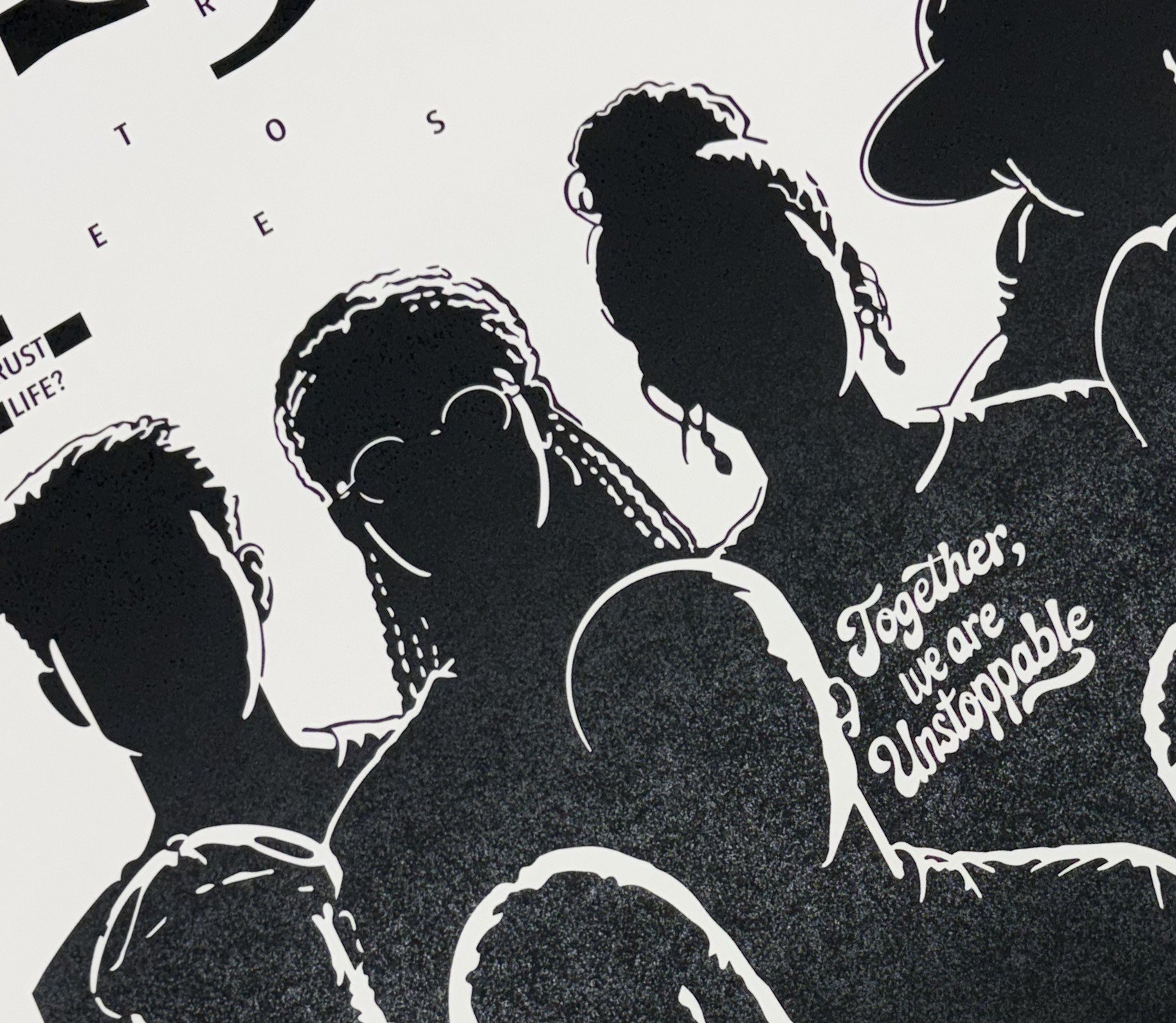
The project uses screenprinted panels to communicate ideas.
What Is Unredacted?
Unredacted is an interactive art installation that combines screenprinted artwork and augmented reality. Visitors enter a circular space surrounded by redacted texts. At first, much of the content appears hidden behind black bars.
Using a mobile device, visitors can reveal additional layers of information through augmented reality. Words, questions, and stories emerge from beneath the redactions, transforming static surfaces into something that unfolds through exploration.
There is no single path through the experience and no correct interpretation waiting at the end. The goal is to encourage curiosity and participation.
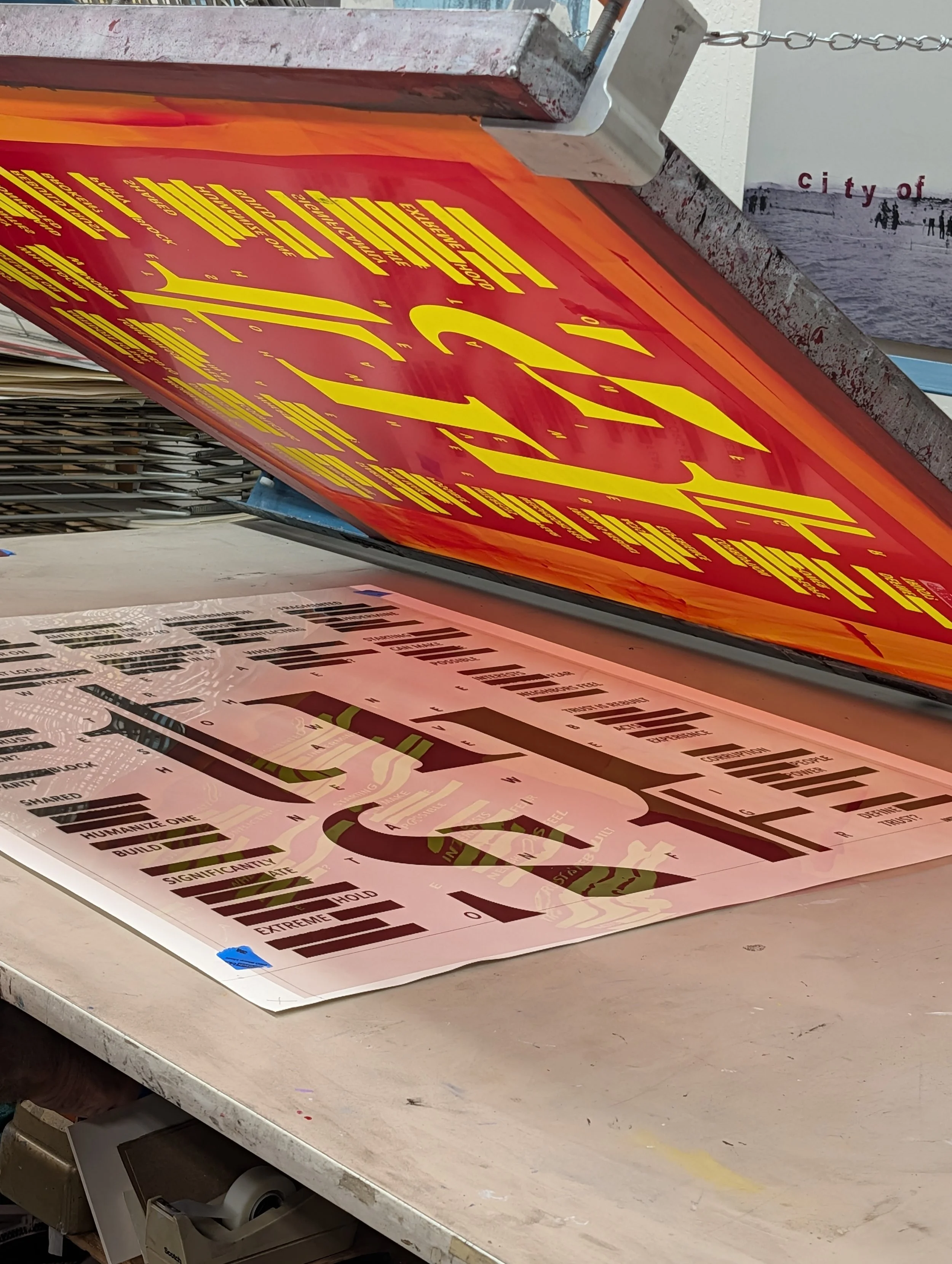
The screenprinting process
Why Redaction?
A redaction hides information. It creates a gap between what is visible and what is not. That idea became the starting point for this project.
In everyday life, we rarely have the complete picture. We encounter information out of context. We bring our own experiences, beliefs, and assumptions to what we read and hear. We often make decisions without knowing everything.
The redacted texts in Unredacted make that experience visible.
Visitors are invited to consider questions like:
What is missing?
Who decides what is visible?
How do we interpret incomplete information?
How do we decide what and whom to trust?
Why Augmented Reality?
Augmented reality makes it possible to reveal information that isn't immediately visible. Instead of clicking through menus or scrolling through a feed, visitors uncover content by moving through a physical space and looking more closely.
This approach is informed by research in immersive media, civic engagement, and experiential learning, which suggests that active participation can help people connect more deeply with ideas and experiences.
For Unredacted, AR goes beyond technology and becomes a way of exploring the idea that there is often more beneath the surface than we first realize.
Research Through Experience
Unredacted was developed as part of a Master's project in Immersive Media Communication at the University of Oregon.
The project explores a simple question:
Can immersive experiences make civic information more tangible, participatory, and personally meaningful?
Unredacted explores that question through a combination of art, interaction, and reflection. The installation draws from research on civic media, participatory design, media literacy, and augmented reality while remaining grounded in a hands-on, human experience.
Following the Process
This Studio Log documents the development of Unredacted from initial concept to public exhibition. Future posts will share design decisions, technical challenges, installation updates, research findings, and lessons learned along the way.
Whether you encounter the project in person, through the digital twin, or here on the website, welcome.
Thanks for following along.